
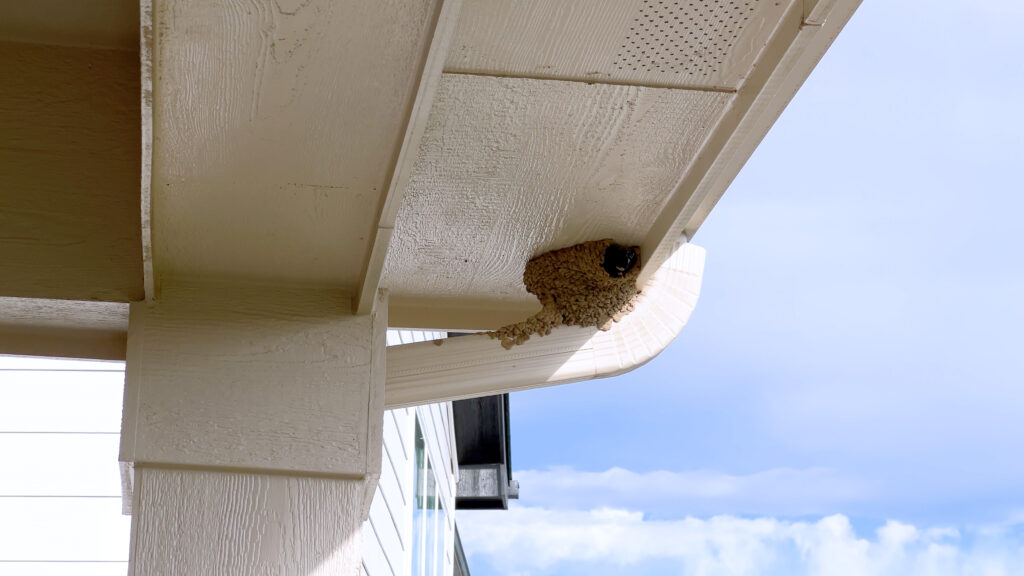
Every summer in the Fraser Valley, wasp nests that were barely visible in May become serious problems by July. What started as a single queen building a small paper nest under your deck can grow into a colony of hundreds or even thousands of aggressive, stinging insects by mid-summer.
If you live in Mission, Maple Ridge, or Pitt Meadows, here’s what you need to know about wasp season and when it’s time to stop watching and start calling.
Why Wasp Nests Explode in Summer
Wasp colonies in BC follow a predictable annual cycle:
- April–May: A single queen emerges from overwintering and builds a small starter nest. At this stage, the nest might be the size of a golf ball with just a handful of workers.
- June: Workers start emerging and take over construction, foraging, and defence. The nest grows rapidly.
- July–August: Peak season. The colony can have 500–5,000 workers depending on the species. Nests reach their maximum size — some paper wasp nests can be as large as a basketball, and ground-nesting yellow jacket colonies can be even larger below the surface.
- September–October: The colony produces new queens and males. Workers become more aggressive as food sources dwindle. This is when most stings happen.
- November: First hard frost kills the colony. Only newly mated queens survive, hidden in sheltered spots until spring.
The critical window is June through September. By mid-summer, nests that were easy to manage in spring are now large, well-defended, and dangerous to approach.
Common Wasps in the Fraser Valley
Yellow Jackets
The most common and most aggressive wasp in BC. Yellow jackets build nests underground (in old rodent burrows, under decks, in retaining walls) and sometimes in wall voids and attics. They’re attracted to sugary food and protein, which is why they show up at outdoor barbecues and picnics.
Yellow jackets are responsible for most wasp stings in the Fraser Valley. They can sting multiple times and will swarm aggressively if their nest is disturbed.
Paper Wasps
Paper wasps build open, umbrella-shaped nests under eaves, deck ceilings, and in sheltered spots. They’re less aggressive than yellow jackets but will sting if you get too close to their nest. Their nests are smaller — usually hosting 20–75 wasps.
Bald-Faced Hornets
Technically a type of yellow jacket, bald-faced hornets build large, enclosed grey paper nests in trees, on buildings, and under overhangs. These nests can be the size of a football or larger. Bald-faced hornets are very aggressive near their nest and can sting repeatedly.
Mud Daubers
Mud daubers build small tube-shaped nests out of mud on walls, under eaves, and in garages. They’re solitary wasps and rarely sting. In most cases, mud dauber nests don’t need professional removal — they’re more of a cosmetic nuisance.
Why DIY Wasp Removal Is Dangerous
We understand the temptation. You see a nest, you grab a can of wasp spray, and you take care of it. For a small, newly started paper wasp nest in an accessible spot, this can work fine.
But for established nests — especially yellow jacket nests and bald-faced hornet nests — DIY removal is genuinely dangerous:
Allergic reactions: About 3% of adults have severe allergic reactions to wasp stings. If you disturb a nest with hundreds of wasps, multiple stings happen fast. Even for people without allergies, 10+ stings can cause a systemic reaction.
Nest location: Many yellow jacket nests are underground or inside walls. Spraying the entrance doesn’t kill the colony — it makes them angry and sends them looking for another exit, which might be inside your house.
Incomplete removal: If you spray a nest but don’t remove it, surviving wasps will rebuild. And over-the-counter sprays don’t always penetrate deep enough to reach the queen.
Heights and awkward positions: Nests on roof peaks, in soffits, or high in trees require ladders. Falling off a ladder while being stung by wasps is a real emergency scenario.
For a deeper look at the risks, read our guide on the dangers of DIY wasp control in Pitt Meadows.
When to Call a Professional
Call now if:
- The nest is larger than a tennis ball (the colony is established and growing)
- The nest is in a high-traffic area — near doors, walkways, decks, or play areas
- The nest is underground or inside a wall void
- Anyone in your household has a known wasp allergy
- You’ve tried DIY treatment and the wasps are still active
- The nest is in a hard-to-reach location (roof peak, inside soffit, high in a tree)
You can probably handle it yourself if:
- It’s a brand-new nest (golf ball size or smaller) with just a few wasps
- It’s a paper wasp nest in an accessible, open location
- Nobody in the household has wasp allergies
- You can spray and retreat quickly without climbing a ladder
How Canadian Pest Control Handles Wasp Removal
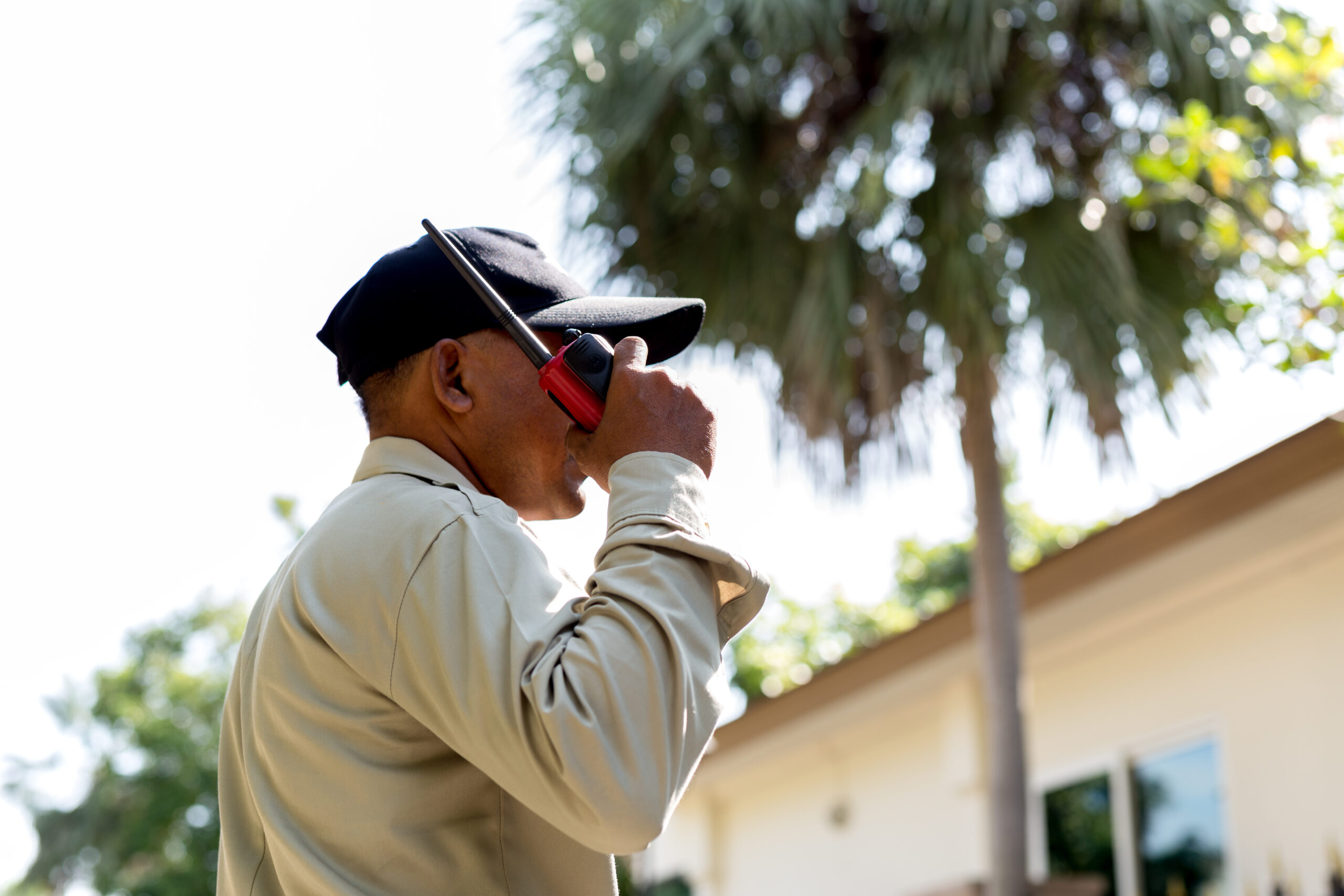
Our wasp removal process is designed for safety and complete elimination:
- Species identification — Different wasps require different approaches. Yellow jacket ground nests are treated differently than paper wasp aerial nests.
- Safety assessment — We evaluate the nest location, size, and proximity to people and pets before choosing our approach.
- Treatment — We use professional-grade products injected directly into the nest. For ground nests, this means treating the entrance and interior of the burrow. For aerial nests, we treat and then physically remove the nest once the colony is eliminated.
- Nest removal — We remove the physical nest to prevent other insects from being attracted to it and to confirm the colony is fully eliminated.
- Prevention advice — We’ll identify what attracted wasps to that location and suggest steps to reduce the chances of a new nest next season.
We handle wasp removal throughout Mission, Maple Ridge, Pitt Meadows, Coquitlam, and the wider Fraser Valley. Our technicians are experienced with every common wasp species in BC and carry the right protective equipment for safe removal. For more on our approach, see our proven wasp removal strategies in Coquitlam.
Preventing Wasp Nests on Your Property
You can’t eliminate wasps entirely — they’re a natural part of the Fraser Valley ecosystem. But you can make your property less attractive:
- Seal entry points: Check eaves, soffits, deck gaps, and foundation cracks in early spring before queens start nesting
- Remove food attractants: Keep outdoor garbage cans sealed, clean up fallen fruit, and cover food at outdoor events
- Inspect early: Walk your property in April and May looking for small starter nests. Removing a golf-ball-sized nest with 5 wasps is easy. Removing a basketball-sized nest with 500 wasps is not.
- Hang deterrents: Fake wasp nests (decoys) can discourage queens from nesting nearby, since wasps are territorial. Results vary, but they’re inexpensive and worth trying.
- Maintain your yard: Overgrown areas, old lumber piles, and unmaintained sheds provide ideal nesting spots.
For a broader approach to seasonal pest prevention, check out our spring pest prevention checklist for Maple Ridge homeowners.
Don’t Wait Until Someone Gets Stung
Wasp nests only get bigger as summer progresses. A nest that’s manageable in June becomes a serious hazard by August. If you’ve spotted a nest on your property in Mission, Maple Ridge, Pitt Meadows, or anywhere in the Fraser Valley, the safest and most cost-effective time to deal with it is now.
Call Canadian Pest Control at (778) 598-7378 or contact us online to schedule a wasp removal. We’ll handle it safely so you can enjoy your summer outdoors.