

Every fall in Maple Ridge, Pitt Meadows, and across the Fraser Valley, the same thing happens: temperatures drop, and mice move in.
It’s not subtle once you know what to listen for. But many homeowners live with mice in their walls for weeks — sometimes months — before they realize what’s going on. Here’s how to tell if mice have moved into your walls, why fall is when it happens, and what actually works to get them out.
Why Mice Move Indoors in Fall
Mice don’t hibernate. When outdoor temperatures consistently drop below 10°C — which in the Fraser Valley typically starts in October — mice seek warm, sheltered spaces with access to food and water. Your house is exactly that.
A single mouse can squeeze through a gap as small as 6 mm. Common entry points include:
- Gaps where utility lines (gas, water, electrical) enter the house
- Cracks in the foundation
- Spaces under doors without proper sweeps
- Deteriorated weatherstripping around garage doors
- Gaps where roofline meets walls
- Openings around dryer vents, exhaust fans, and HVAC penetrations
Once inside, mice follow pipes and wiring through wall cavities to access every level of the home. Your walls are essentially a highway system connecting the basement to the attic.
Signs You Have Mice in Your Walls
1. Scratching and Scurrying Sounds at Night
Mice are nocturnal. The most obvious sign is hearing faint scratching, scurrying, or gnawing sounds coming from inside walls, especially after you’ve gone to bed and the house is quiet. The sounds are typically:
- Light and quick (not the heavy thumping of raccoons)
- Coming from wall cavities, under floors, or above ceilings
- Most active between midnight and 5 AM
2. Droppings
Mouse droppings are small (3–6 mm), dark, pellet-shaped, and pointed at the ends. You’ll find them in places mice travel:
- Inside kitchen cupboards, especially under the sink
- Along baseboards and in corners
- Behind appliances (stove, refrigerator)
- In pantries and storage areas
- In the attic or basement near entry points
Fresh droppings are dark and soft. Old droppings are grey and crumbly. If you’re finding both, the infestation is ongoing.
3. Musty Odour
Mouse urine has a distinctive ammonia-like smell that builds over time. In wall cavities where mice travel repeatedly, the urine soaks into insulation and wood. If you notice a persistent musty or stale smell near walls — especially in enclosed spaces like closets or under stairs — mice are a likely cause.
4. Gnaw Marks
Mice gnaw constantly to keep their teeth worn down. Look for gnaw marks on:
- Food packaging (cardboard boxes, plastic bags)
- Baseboards and door frames
- Electrical wiring (this is a fire hazard — check your attic and basement)
- Insulation and stored items
5. Grease Marks
Mice follow the same paths repeatedly, and their oily fur leaves dark smudge marks along walls, baseboards, and around entry holes. These rub marks are a reliable indicator of an active mouse trail.
6. Nesting Material
Mice build nests from shredded paper, insulation, fabric, and other soft materials. If you find small piles of shredded material in hidden spots — behind appliances, in storage boxes, in the attic — you’ve found a nest or nesting site.
7. Pet Behaviour
Dogs and cats often detect mice before you do. If your pet is suddenly fixated on a particular wall, pacing near baseboards, or pawing at the floor or wall, they may be hearing or smelling mice inside.
Why Traps Alone Don’t Solve the Problem
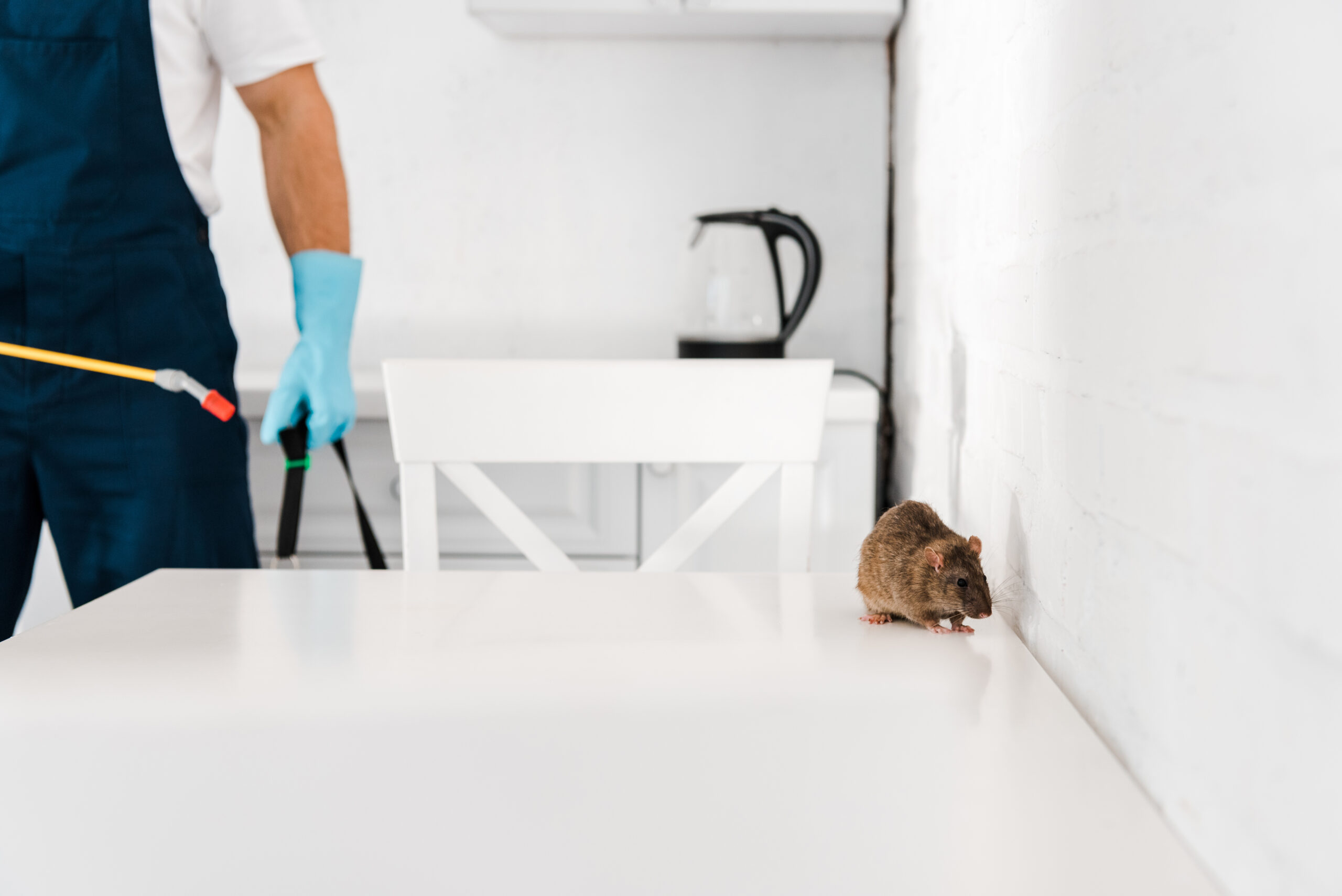
Trapping is part of the solution, but only part. Here’s the issue:
If the entry points are still open, new mice will keep coming in. Mice leave scent trails (urine marks) along their paths, and these trails attract other mice to the same entry points. Trapping without sealing entries is an endless cycle — you catch a few, more arrive.
A single pair of mice can produce 60+ offspring per year. Mice reproduce rapidly. A female can have 5–10 litters per year with 5–6 pups each. If you’re relying solely on traps, the population can grow faster than you can catch them.
Traps only catch mice that cross their path. Mice in wall cavities, attic spaces, and areas behind appliances may never encounter the traps you’ve set in the kitchen.
The only permanent solution is exclusion — finding and sealing every gap and crack where mice enter, combined with trapping to remove the ones already inside.
What Actually Works: The Exclusion Approach
Professional Rodent Exclusion
At Canadian Pest Control, our mouse removal process targets both the mice inside and the entry points that let them in:
- Interior inspection — We check the attic, basement, crawl space, and behind appliances for signs of activity, droppings, nests, and damage.
- Exterior inspection — We examine the full perimeter of the home from foundation to roofline, identifying every gap, crack, and opening mice could use.
- Trapping — Professional snap traps placed along confirmed mouse pathways (identified by droppings, grease marks, and activity patterns).
- Exclusion — Every identified entry point is sealed with appropriate materials. Steel wool combined with caulk for smaller gaps. Metal flashing or hardware cloth for larger openings. Mice can chew through expanding foam, wood, and plastic — but not steel.
- Follow-up — We return to check traps, confirm activity has stopped, and verify that sealed entry points are holding.
For a detailed guide to the exclusion process, see our complete guide to rodent-proofing your Maple Ridge home.
What You Can Do Right Now
While waiting for professional service — or as a complement to it:
- Set snap traps along walls where you’ve found droppings (peanut butter works well as bait)
- Store food in airtight containers — glass or metal, not plastic bags
- Clean up droppings with gloves and disinfectant (don’t sweep or vacuum dry droppings — this can aerosolize hantavirus particles)
- Seal obvious gaps you can reach — steel wool stuffed into gaps around pipes is a quick temporary measure
- Move bird feeders away from the house — spilled seed attracts mice to the foundation
Act Before Winter Sets In
The longer you wait, the more established the mice become. A few mice in October becomes a breeding population by December. Entry points that could be sealed with a bit of steel wool and caulk today may require much more work after rodents have been chewing and enlarging them for months.
If you’re hearing scratching in the walls or finding droppings in the kitchen, call Canadian Pest Control at (778) 598-7378 or contact us online. We’ll find how they’re getting in, get them out, and seal your home so it doesn’t happen next fall.
We serve Maple Ridge, Pitt Meadows, Coquitlam, Port Coquitlam, Mission, Langley, and the Fraser Valley.