
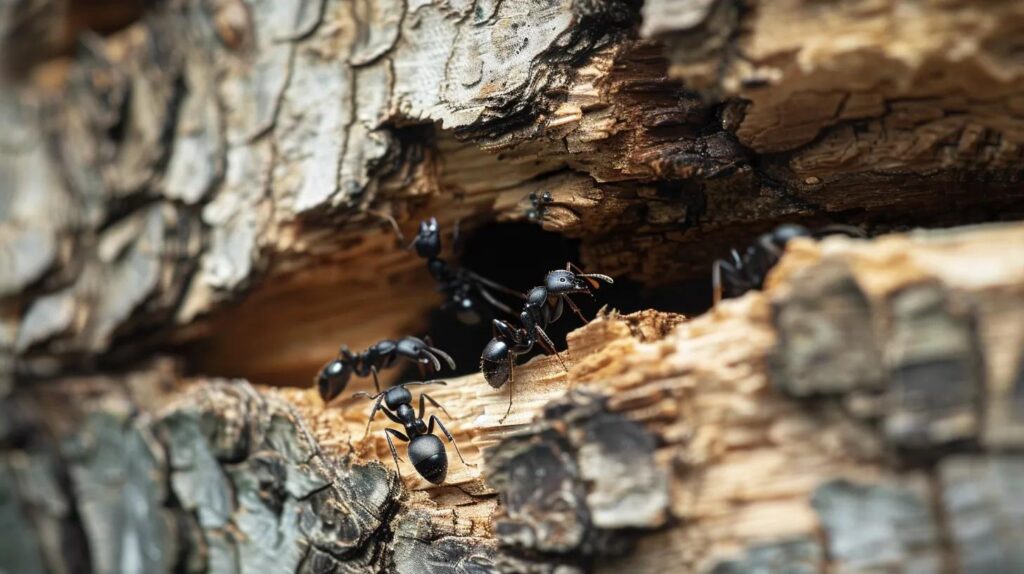
Spring has arrived in Maple Ridge, and so have carpenter ants. Every year between April and September, homeowners across the Lower Mainland discover these large, dark ants marching through their kitchens, bathrooms, and along their foundations. Unlike the harmless pavement ants that show up at picnics, carpenter ants are structural pests — and carpenter ant damage in Maple Ridge is more common than most people realize.
Carpenter ants don’t eat wood the way termites do. Instead, they excavate it to build their nests, hollowing out beams, joists, window frames, and any wood that’s softened by moisture. Left unchecked, a mature colony can cause thousands of dollars in structural damage. The key is catching them early and knowing what to look for.
Why Maple Ridge Is Prime Carpenter Ant Territory
Maple Ridge’s geography makes it especially vulnerable to carpenter ant infestations. The combination of:
- Abundant rainfall — wet wood is carpenter ant habitat number one
- Proximity to forests and green spaces — parent colonies typically establish in dead trees, stumps, and woodpiles before sending satellite colonies into homes
- Older housing stock — many Maple Ridge homes have wood framing, cedar siding, and crawl spaces that provide ideal nesting conditions
- Moderate temperatures — BC’s climate allows carpenter ant colonies to remain active for 6-7 months of the year
Homes near Golden Ears Provincial Park, along the Alouette River, or backing onto wooded lots are particularly susceptible — but carpenter ants can show up anywhere in Maple Ridge, Coquitlam, Port Coquitlam, and Pitt Meadows.
Signs of Carpenter Ant Damage
Catching carpenter ant damage early can save you from costly structural repairs. Here are the warning signs every Maple Ridge homeowner should know:
1. Frass (Sawdust-Like Debris)
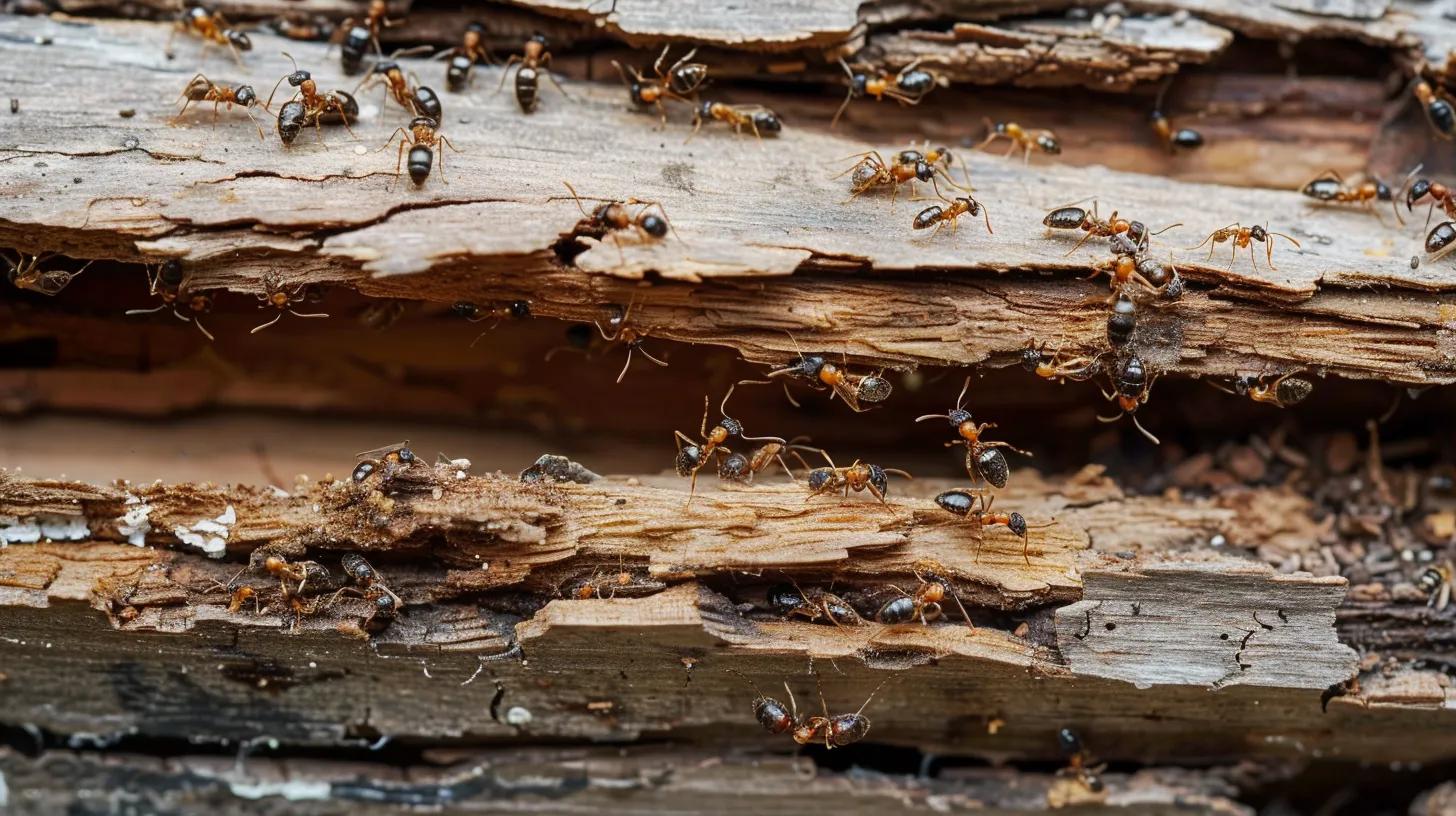
This is the most distinctive sign. Carpenter ants push wood shavings out of their tunnels as they excavate, leaving small piles of coarse, sawdust-like material called frass. You’ll typically find it near baseboards, windowsills, door frames, or anywhere wood meets the floor. Frass often contains fragments of dead insects mixed with the wood shavings — a key identifier that it’s ant-related, not just sawdust from construction.
2. Hollow-Sounding Wood
Tap on wooden surfaces — window frames, door frames, beams, porch columns. If the wood sounds hollow or feels soft and spongy, carpenter ants may have excavated the interior. Damage often starts from the inside where moisture has softened the wood, so the exterior surface may look completely normal.
3. Visible Ants — Especially Large Ones
Carpenter ant workers are large — typically 6 to 13mm (1/4 to 1/2 inch). They’re black, dark brown, or occasionally reddish-black. Seeing a few large ants in your home, especially in the kitchen or bathroom, can indicate a nest nearby. Seeing them consistently over several days — particularly at night, when they’re most active — is a strong sign of an established colony.
4. Rustling or Crunching Sounds
Press your ear against a wall where you suspect activity. An active carpenter ant nest produces faint but audible rustling or crunching sounds as workers excavate wood. This is most noticeable at night when the house is quiet.
5. Winged Swarmers in Spring
Between April and June, mature carpenter ant colonies produce winged reproductive ants (swarmers) that leave the nest to mate and establish new colonies. Finding winged ants inside your home — especially emerging from walls, ceilings, or around windows — means there’s a well-established colony somewhere in the structure. Swarmers inside the home are a serious red flag.
6. Damaged or Crumbling Wood
In advanced infestations, you’ll see visible damage to wooden structures. Door frames that crack when touched, porch railings that give way under light pressure, or deck boards that crumble reveal long-term carpenter ant excavation. At this point, the colony has likely been active for several years.
Carpenter Ants vs. Termites: How to Tell the Difference
Many homeowners confuse carpenter ants with termites. Both damage wood, but they’re very different pests requiring different treatments.
| Feature | Carpenter Ants | Termites |
| Body shape | Narrow waist, bent antennae | Thick waist, straight antennae |
| Wings | Front wings longer than hind wings | All four wings equal length |
| Wood damage | Smooth, clean galleries with frass outside | Rough, muddy tunnels packed with soil |
| Diet | Don’t eat wood — only excavate it | Eat and digest wood (cellulose) |
| Evidence | Piles of frass near nests | Mud tubes on foundation walls |
| Activity | Most active at night, visible foragers | Rarely visible — stay inside wood and soil |
In Maple Ridge, carpenter ants are far more common than termites. Subterranean termites do exist in some parts of BC but are relatively uncommon in the Lower Mainland. If you’re unsure which pest you’re dealing with, a professional inspection will give you a definitive answer.
When Are Carpenter Ants Active in BC?
Carpenter ant season in Maple Ridge runs from approximately April through September, with peak activity in May and June when temperatures are consistently above 15°C and daylight hours are longest.
Here’s the seasonal timeline:
- March–April: Overwintering colonies become active. Workers begin foraging for food and water.
- April–June: Swarmers emerge from mature colonies. New satellite colonies are established.
- May–August: Peak activity. Colonies are expanding, foraging is at its highest, and damage accumulates fastest.
- September–October: Activity slows as temperatures drop. Ants retreat deeper into nesting sites.
- November–March: Colonies overwinter. Indoor colonies in heated spaces may remain partially active.
Important: just because you don’t see ants in winter doesn’t mean they’re gone. Indoor colonies that have established in wall cavities, attics, or crawl spaces can remain active year-round if the temperature stays above 10°C.
How Much Does Carpenter Ant Treatment Cost in Maple Ridge?
The cost of addressing a carpenter ant problem depends on the infestation’s size, location, and how long it’s been established:
- Professional inspection: $100–$200 (often waived if you proceed with treatment)
- Standard treatment (baiting + dust application): $300–$600
- Extensive treatment (multiple colonies, wall injection): $600–$1,200
- Follow-up visits: $150–$300 per visit
- Structural repair (if damage is severe): $1,000–$10,000+
Compare this to DIY options: store-bought ant sprays ($15–$40) may kill ants on contact but rarely reach the nest. Carpenter ants nest deep inside structural wood — surface sprays don’t penetrate. Most homeowners who try DIY first end up calling a professional after the problem gets worse.
The earlier you catch an infestation, the less it costs. A colony caught in year one might cost $400 to treat. A colony that’s been active for five years could require $5,000+ in treatment and repairs.
How to Protect Your Maple Ridge Home from Carpenter Ants
Prevention is always cheaper than treatment. Here’s what you can do:
Control Moisture
Carpenter ants need moisture-softened wood to excavate efficiently. Fix leaky pipes, ensure proper drainage around your foundation, repair damaged flashing, and run dehumidifiers in damp basements and crawl spaces. Pay special attention to bathrooms, kitchens, and areas around water heaters.
Remove Wood-to-Soil Contact
Don’t let wooden structures touch the ground. Fence posts, deck supports, and siding should be separated from soil with concrete footings or metal brackets. Wood buried in or touching soil absorbs moisture and becomes a magnet for carpenter ants.
Store Firewood Properly
Keep firewood at least 20 feet from your home and elevated off the ground on a rack. Never store firewood against the house or in the garage. Always inspect firewood before bringing it inside — carpenter ant colonies frequently establish in woodpiles.
Trim Vegetation
Overhanging tree branches, shrubs touching the house, and dense ivy on exterior walls all provide pathways for carpenter ants to reach your home. Keep a clear 12-inch gap between vegetation and exterior walls.
Seal Entry Points
Caulk gaps around windows, doors, pipe penetrations, and where siding meets the foundation. While ants can find very small gaps, reducing easy access points makes your home a less attractive target.
Schedule Annual Inspections
An annual pest inspection catches problems before they become expensive. A trained technician can spot early signs of carpenter ant activity that most homeowners would miss — subtle frass deposits, moisture patterns, and structural conditions that invite infestation.
Professional Carpenter Ant Treatment from Canadian Pest Control
When you call Canadian Pest Control for carpenter ant treatment in Maple Ridge, here’s what happens:
1. Thorough inspection — we locate the nest (or nests), identify the species, trace foraging trails, and assess the extent of any damage
2. Targeted treatment — we use a combination of professional-grade baits, dust applications, and where necessary, wall injection to reach nests inside structural wood
3. Entry point management — we identify and recommend sealing moisture sources and access points that made your home vulnerable
4. Follow-up — we return to verify the colony has been eliminated and check for any new activity
5. Prevention plan — we provide specific recommendations for your property to prevent re-infestation
Don’t Wait for the Damage to Get Worse
Carpenter ant colonies grow slowly at first, then accelerate. A colony that’s barely noticeable in year one can have 10,000+ workers by year five — all excavating wood inside your walls, floors, and roof structure.
If you’ve seen large black ants in your Maple Ridge home, found piles of sawdust-like debris, or heard faint rustling in the walls, don’t wait. Call Canadian Pest Control at (778) 598-7378 for a free inspection and quote. We serve Maple Ridge, Coquitlam, Port Coquitlam, Pitt Meadows, and the entire Lower Mainland — 24/7.