
You open a bag of flour and find small worms. Or you spot tiny moths fluttering around the kitchen ceiling. Or you see webbing inside a cereal box that definitely didn’t come from the factory.
Pantry moths — specifically Indian meal moths — are one of the most common stored product pests in Canadian homes. They’re not dangerous, but they contaminate food, they’re stubborn to eliminate, and they can infest your entire pantry if you don’t catch them early.
Here’s how to identify them, clean up an infestation, and make sure they don’t come back.
What Are Pantry Moths?
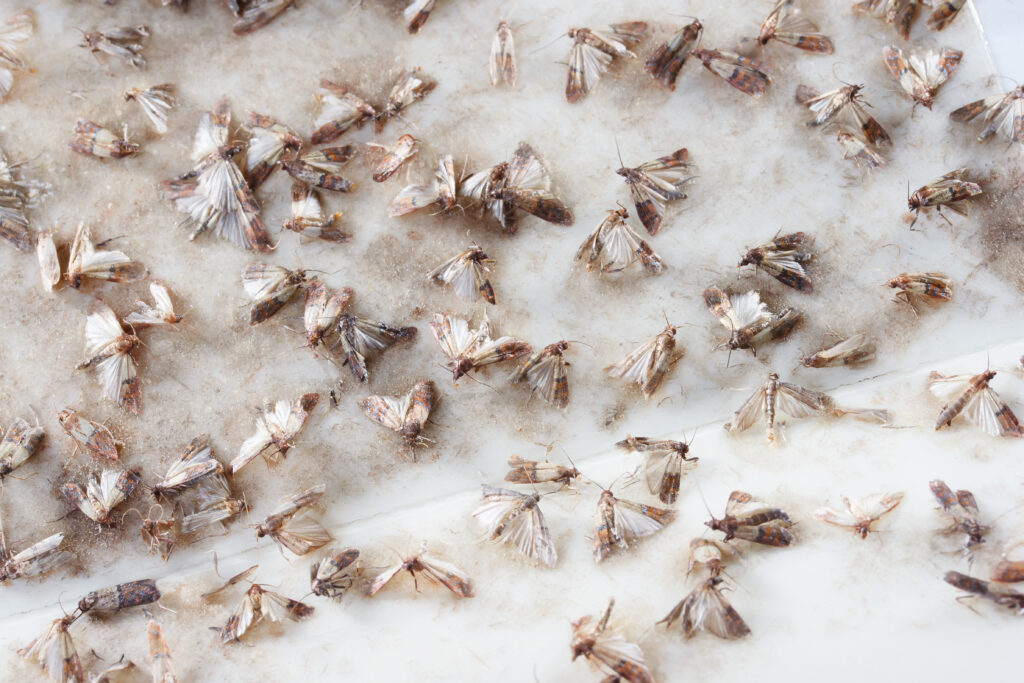
The Indian meal moth (Plodia interpunctella) is the most common pantry pest in BC. Adults are small moths, about 8–10 mm long, with distinctive two-toned wings — the front half is pale grey or tan, and the back half is a coppery reddish-brown.
But the adults aren’t the problem. It’s the larvae (small cream-coloured caterpillars, about 12 mm long) that do the damage. Larvae feed inside food packages, contaminating products with webbing, frass (droppings), and shed skins.
Common Pantry Moth Foods
Indian meal moths infest a wide range of dry goods:
- Flour, cornmeal, and baking mixes
- Cereals, granola, and oats
- Rice, pasta, and grains
- Dried fruit and nuts
- Spices (especially paprika, chili flakes, and dried herbs)
- Pet food and bird seed
- Chocolate and candy
- Dried beans and lentils
- Tea bags and dried flowers
They can chew through thin plastic bags and cardboard — so original packaging is no barrier.
How Pantry Moths Get Into Your Home
In almost every case, you brought them home from the store. Eggs or larvae are already inside the food packaging when you buy it. The products look fine on the shelf, but microscopic eggs are present in the packaging, and they hatch in your pantry.
This isn’t a cleanliness issue. Pantry moths infest spotless kitchens just as readily as messy ones. The source is almost always a contaminated product, not a dirty home.
Less commonly, adult moths can fly in through open windows or doors, but the store-bought product route is by far the most common.
Signs of a Pantry Moth Infestation
- Adult moths — Small moths (8–10 mm) flying in the kitchen, especially near ceilings, light fixtures, and around food storage areas. They fly in a distinctive zigzag pattern.
- Larvae — Small cream-coloured caterpillars inside food packages. They may be crawling on shelves, walls, or ceilings as they look for a place to pupate.
- Webbing — Fine silky webbing inside food containers, along shelf edges, and in corners. This is the most distinctive sign.
- Frass — Fine, sand-like droppings inside food packages.
- Clumping — Flour or grains that have clumped together due to larval webbing.
Step-by-Step Cleanup

Step 1: Find the Source
Inspect every dry food item in your pantry. Open every package — even sealed ones. Look for larvae, webbing, and clumping. The source is often something tucked in the back that you forgot about: an old bag of birdseed, a half-used package of flour, or dried pet treats.
Step 2: Dispose of Infested Items
Throw away anything that shows signs of infestation. Be thorough — if you’re unsure about a product, toss it. Seal infested food in plastic bags before putting it in the garbage, and take the garbage outside immediately.
Step 3: Empty and Deep Clean the Pantry
Remove everything from the pantry — every item, every shelf liner. Then:
- Vacuum all shelves, corners, cracks, and crevices (larvae and pupae hide in crevices)
- Wash all surfaces with hot, soapy water
- Pay special attention to shelf bracket holes, hinges, and the undersides of shelves
- Wipe down all containers before returning them to the pantry
Step 4: Use Pheromone Traps
After cleaning, place pantry moth pheromone traps in the pantry. These use a sticky surface with a moth pheromone lure to attract and trap adult male moths. They won’t eliminate the infestation on their own, but they serve two purposes:
- Reduce the mating population
- Monitor whether moths are still present after cleanup
Replace traps every 2–3 months.
Step 5: Restock Smart
When you return food to the pantry:
- Transfer dry goods to airtight containers — glass jars with rubber seals, metal tins, or heavy-duty plastic containers with snap-lock lids
- Inspect new purchases before opening — look for any signs of webbing or larvae
- Consider freezing new flour, grains, and dried goods for 72 hours after purchase — this kills any eggs or larvae that may be present
Prevention: Keeping Pantry Moths Out
- Airtight storage is king — If moths can’t get to the food, they can’t infest it. Invest in a set of glass or metal pantry containers.
- Rotate stock — Use older items first. Don’t let products sit untouched for months.
- Freeze vulnerable items — Flour, nuts, dried fruit, and grains can be stored in the freezer long-term or frozen for 72 hours upon purchase to kill any hitchhiking eggs.
- Bay leaves — Placing bay leaves in pantry containers and on shelves is a traditional deterrent. Evidence is mixed, but they’re harmless and may help.
- Regular inspection — Check the pantry monthly for any signs of moths, webbing, or larvae. Catching a new infestation early is much easier than dealing with an established one.
- Clean up spills — Crumbs and spilled flour in shelf crevices feed larvae. Wipe shelves regularly.
When to Call a Professional
Most pantry moth infestations can be resolved with thorough cleanup and airtight storage. But contact a pest control professional if:
- Moths keep returning after you’ve done a full cleanup — larvae or pupae may be hiding in cracks, behind baseboards, or in areas you can’t access
- The infestation has spread beyond the pantry — if you’re finding larvae on ceilings, in other rooms, or in multiple areas of the kitchen, the population is large and may have pupation sites throughout the home
- You’re in a multi-unit building — pantry moths can migrate between units through shared walls and ductwork
For related kitchen pest issues, our guide to what attracts cockroaches in clean homes covers another common kitchen invader.
Get Rid of Pantry Moths for Good
Pantry moths are frustrating but manageable. The combination of thorough cleanup, airtight storage, and monitoring traps resolves most infestations within 2–4 weeks. If the problem persists, professional treatment can target the hidden pupation sites that keep the cycle going.
Call Canadian Pest Control at (778) 598-7378 or contact us online if you need help with a stubborn pantry moth problem or any other kitchen pest issue. We serve Maple Ridge, Pitt Meadows, Coquitlam, Langley, Mission, and the Fraser Valley.