
You go downstairs to grab something from storage and find a cluster of dark, pincer-tailed insects scurrying away from the light. They look alarming. They move fast. And there are more of them than you’d like.
Earwigs are one of the most misunderstood pests in BC homes. They look intimidating but are mostly harmless — though when they show up in numbers, they become a genuine nuisance. Here’s why they’re in your basement and how to get them out.
What Are Earwigs?
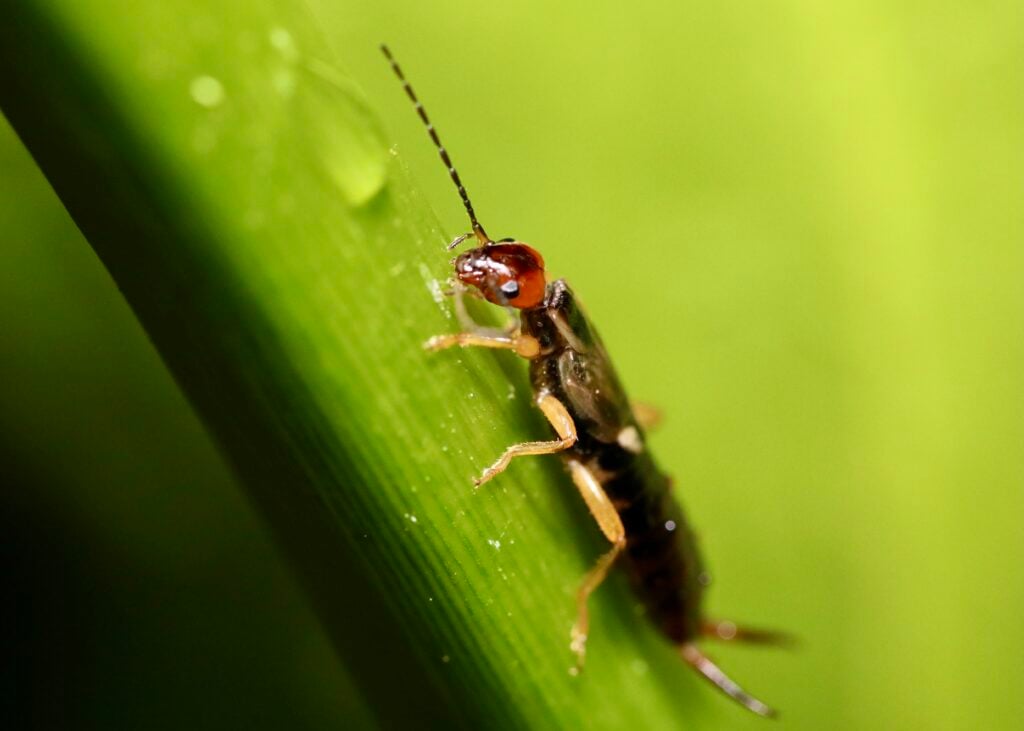
Earwigs are slender, dark brown insects about 15–25 mm long with distinctive pincers (cerci) on their rear end. Despite the old myth, they do not crawl into ears. The pincers are used for defence and mating displays — they can give a mild pinch if handled but can’t break skin in any meaningful way.
Earwigs are nocturnal and strongly attracted to moisture. During the day, they hide in dark, damp crevices. At night, they emerge to feed on decaying organic matter, plant material, and other small insects.
Why Your BC Basement Is Perfect for Earwigs
Earwigs are outdoor insects that enter homes when conditions drive them inside — and BC basements offer exactly what they’re looking for:
Moisture: Earwigs require high humidity to survive. Fraser Valley basements — especially unfinished ones, homes with crawl spaces, or older construction without modern vapour barriers — often maintain the damp conditions earwigs prefer. Condensation on cold water pipes, minor seepage, and poor ventilation all contribute.
Shelter: Earwigs move indoors during two conditions: when it’s very hot and dry outside (seeking moisture) and during heavy rain (seeking shelter from flooding). In Maple Ridge and Pitt Meadows, both scenarios happen during summer.
Entry points: Earwigs enter through foundation cracks, gaps around basement windows, under doors without proper weatherstripping, and through utility penetrations (where pipes and wires enter the house). They can also hitch a ride on firewood, potted plants, and garden tools brought inside.
Food: Basements with storage boxes, old newspapers, and organic debris provide feeding opportunities. Earwigs will also eat mould and mildew — both common in damp BC basements.
Are Earwigs Dangerous?
No. Earwigs are not dangerous to humans or pets. They don’t bite (the pincers can pinch but it’s harmless), don’t transmit diseases, and don’t cause structural damage.
They can damage houseplants and seedlings if they’re feeding on live plant material, and in large numbers they’re simply unpleasant to find in your living space. But they’re not a health or safety concern.
The main issue is the “ick factor” — and the fact that where you see a few, there are usually many more hiding nearby.
How to Get Rid of Earwigs
Step 1: Reduce Moisture
This is the most effective long-term solution. If you make your basement inhospitable, earwigs will leave or die off:
- Run a dehumidifier — Target below 60% relative humidity
- Fix leaks — Repair dripping pipes, weeping foundation walls, and condensation issues
- Improve ventilation — Open basement windows when weather allows, ensure bathroom and laundry exhaust fans work properly
- Address grading — Make sure the ground around your foundation slopes away from the house so rainwater doesn’t pool against basement walls
Step 2: Seal Entry Points
- Caulk foundation cracks — Even small gaps along the foundation wall are enough
- Weatherstrip basement doors and windows
- Seal around utility penetrations — Where pipes, electrical conduits, and cables enter the basement
- Screen basement window wells and floor drains
For a broader look at how pests enter homes, our guide on pest entry points in Port Coquitlam homes covers the most common access points.
Step 3: Remove Attractants
- Clear debris around the exterior foundation — leaf litter, mulch piled against the house, firewood stored against walls, and garden waste all harbour earwigs
- Move firewood at least 5 metres from the house and elevate it off the ground
- Replace mulch near the foundation with gravel or rock — mulch retains moisture and is prime earwig habitat
- Remove cardboard and paper clutter from the basement — store items in sealed plastic bins
Step 4: DIY Treatment
- Diatomaceous earth (DE) — Apply food-grade DE along baseboards, in cracks, around window frames, and in corners where earwigs hide. DE damages their exoskeleton and dehydrates them. Reapply if it gets wet.
- Sticky traps — Place along basement walls and in corners to catch and monitor earwigs
- Oil and soy sauce traps — Fill shallow containers with equal parts vegetable oil and soy sauce. Earwigs are attracted to the smell and drown. Place near known activity areas.
- Exterior perimeter treatment — A granular or spray insecticide applied around the foundation exterior can create a barrier. Look for products labeled for earwig control.
Step 5: When to Call a Professional
Contact a pest control professional if:
- You’re finding earwigs regularly throughout the basement (not just one or two)
- DIY methods haven’t reduced the population after 4–6 weeks
- Earwigs are appearing on upper floors — this suggests a large population with multiple entry points
- You can’t identify or access the entry points yourself
Professional treatment targets the harbourage areas and entry points that DIY methods often miss, with products that provide longer-lasting residual control.
For more on environmentally conscious approaches, see our article on natural and local pest control methods.
Keep Earwigs Out for Good
Earwigs aren’t dangerous, but they’re persistent. The key to long-term control is moisture reduction and exclusion — make your basement dry and sealed, and earwigs will have no reason to be there.
If the population is already established and DIY isn’t cutting it, call Canadian Pest Control at (778) 598-7378 or contact us online. We serve Maple Ridge, Pitt Meadows, Coquitlam, Mission, Langley, and the Fraser Valley.