
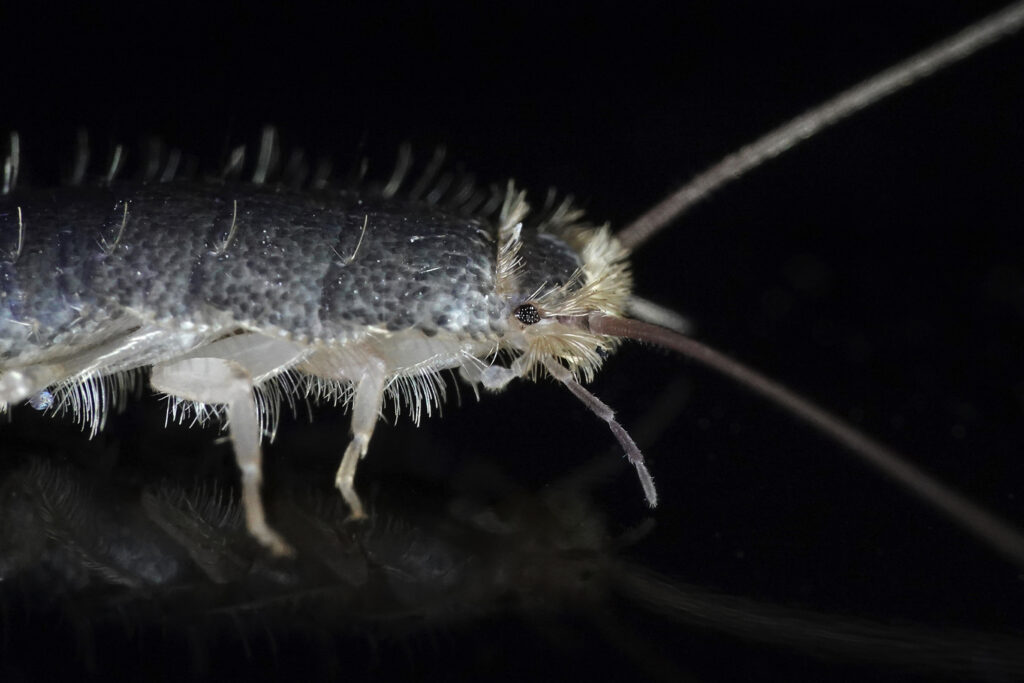
You reach into a box in the basement and something small, silver, and fast darts away. Or you find tiny holes chewed through old paperbacks on the shelf. Or you notice irregular yellow stains on stored clothing.
Chances are, you have silverfish.
They’re one of the most common household pests in British Columbia, yet most homeowners know almost nothing about them. Here’s what silverfish are, why your BC home is perfect for them, and what to do about it.
What Do Silverfish Look Like?
Silverfish are small, wingless insects — typically 12 to 19 mm long — with a distinctive teardrop shape and silvery-grey colour. They have three long tail-like appendages at their rear and two long antennae at the front. Their movement is fast and fish-like, which is where the name comes from.
They’re nocturnal, which is why you might live with silverfish for months before you ever see one. They hide during the day in cracks, behind baseboards, inside storage boxes, and in wall voids, and come out at night to feed.
Why BC Homes Are Perfect for Silverfish
Silverfish need two things: moisture and starch-based food. British Columbia’s climate — especially in the Fraser Valley — delivers both.
Humidity
The Lower Mainland is one of the most humid regions in Canada. Basements, crawl spaces, bathrooms, and laundry rooms in Maple Ridge, Pitt Meadows, and Coquitlam homes often maintain the 75–90% relative humidity that silverfish prefer. Homes with poor ventilation, unfinished basements, or crawl spaces without vapour barriers are especially vulnerable.
Food Sources
Silverfish eat starch, cellulose, and protein. In a typical home, that means:
- Paper and cardboard — books, newspapers, stored documents, cardboard boxes
- Wallpaper and wallpaper paste — the glue is a favourite
- Clothing — especially cotton, linen, and silk, particularly if stored and undisturbed
- Pantry items — flour, cereal, oats, dried pasta
- Dead insects and shed skin — they’ll eat almost any organic material
- Book bindings and photos — the glue used in bookbinding is a primary food source
If you have boxes of old books, clothing, or documents stored in a damp basement, you’ve essentially set out a buffet.
Are Silverfish Harmful?
Silverfish don’t bite, don’t transmit diseases, and aren’t dangerous to humans or pets. They’re not a health hazard in the way that rodents or cockroaches are.
But they do cause property damage:
- They chew irregular holes and surface damage in paper, books, and documents
- They can damage wallpaper by eating the paste beneath it
- They leave yellow stains on fabric and paper
- They damage stored photographs and important documents
- In large numbers, they can contaminate pantry food
The damage is cumulative. A small silverfish population in your basement might go unnoticed for years, slowly destroying stored items. By the time you notice, the damage is done.
Signs of a Silverfish Problem
- Sightings — Seeing silverfish in bathrooms, basements, kitchens, or storage areas, especially at night
- Feeding damage — Irregular holes or surface scraping on paper, books, wallpaper, or clothing
- Yellow stains — On fabric, paper, or surfaces where they’ve been feeding
- Tiny dark droppings — Silverfish leave small, pepper-like droppings in areas they frequent
- Shed skins — Silverfish moult throughout their life (they can live 2–8 years), leaving transparent skin casings behind
How to Get Rid of Silverfish

Prevention: Control Moisture First
Since moisture is the primary attractor, reducing humidity is the single most effective step:
- Use dehumidifiers in basements, crawl spaces, and laundry rooms — aim for below 60% relative humidity
- Fix leaks — dripping pipes, condensation on cold water pipes, and seepage through foundation walls all contribute
- Improve ventilation — bathroom exhaust fans, crawl space vents, and ensuring dryer vents exhaust outside
- Install a vapour barrier in crawl spaces if you don’t have one
- Don’t store cardboard boxes on basement floors — use plastic bins with lids on shelving
Reduce Food Sources
- Store books, documents, and photos in sealed plastic containers rather than cardboard boxes
- Keep pantry items in airtight containers
- Remove old newspapers, magazines, and cardboard from storage areas
- If you have wallpaper in damp rooms, consider replacing it with paint
DIY Treatment Options
- Diatomaceous earth (DE) — Food-grade DE can be dusted into cracks, behind baseboards, and in storage areas. It damages the silverfish’s waxy coating, causing dehydration. Safe for humans and pets, but needs to stay dry to work.
- Sticky traps — Place in corners, along baseboards, and near storage areas to monitor populations and catch active silverfish.
- Boric acid — Effective but should be used carefully in homes with children and pets. Apply in cracks and voids where silverfish hide.
When to Call an Exterminator
DIY methods work for small populations. Call a professional if:
- You’re seeing silverfish regularly — multiple sightings per week suggests an established population
- You’ve found damage — if silverfish have been damaging books, documents, or clothing, the population is likely larger than what you’re seeing
- DIY hasn’t worked after 4–6 weeks — if traps and DE aren’t reducing sightings, the population is too large or they’re breeding in areas you can’t reach
- They’re in multiple rooms — a silverfish problem that’s spread beyond one area of the home needs targeted treatment in wall voids and hidden spaces
Professional treatment targets silverfish where they live — inside wall voids, behind baseboards, in attic insulation, and in crawl spaces. We use products that reach the harbourage areas DIY methods can’t.
For more on how pests find their way into your home, read about common pest entry points in homes and safe, local pest control methods.
Get Your Silverfish Problem Solved
Silverfish are persistent, long-lived, and good at hiding. If moisture control and DIY methods aren’t getting the job done, professional treatment will.
Call Canadian Pest Control at (778) 598-7378 or contact us online. We serve Maple Ridge, Pitt Meadows, Coquitlam, Port Coquitlam, Mission, Langley, and the Fraser Valley.